Intel 80286 Processor: The CPU That Brought PCs Into the Modern Age
80286
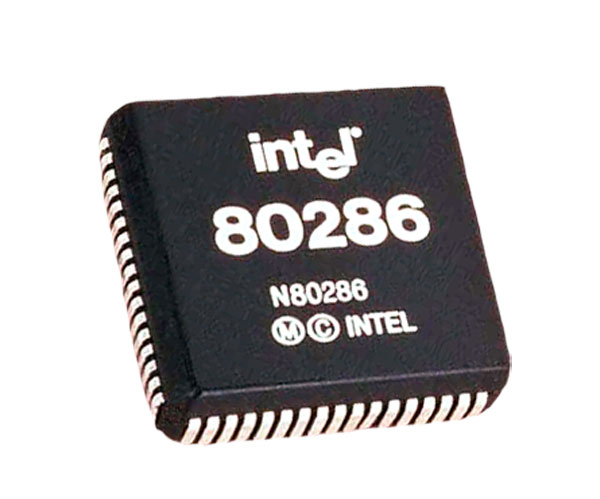
The Intel 80286, commonly called the 286 processor, was one of the most important microprocessors ever produced. Released by Intel in February 1982, the 286 represented a major technological leap beyond the earlier 8086 and 8088 processors used in the first generation of IBM Personal Computers.
While modern processors contain billions of transistors and operate at speeds measured in gigahertz, the 286 marked the beginning of advanced PC computing. It introduced features such as memory protection, multitasking support, and expanded memory addressing that would influence computer architecture for decades.
Many historians consider the 286 to be the processor that transformed personal computers from hobbyist and office machines into serious business workstations.
Historical Background
During the late 1970s and early 1980s, personal computers were becoming increasingly popular. The original IBM PC, introduced in 1981, used the Intel 8088 processor. Although successful, it had significant limitations in memory capacity and performance.
Intel developed the 80286 to address these limitations. The new processor offered:
Higher clock speeds
Better performance
More memory support
Improved operating system capabilities
Enhanced system security
Feature
Intel 80286:Release Year: 1982
Data Bus Width: 16-bit
Address Bus Width: 24-bit
Maximum Memory: 16 MB
Clock Speeds: 6 MHz – 25 MHz
Transistors inside: Approximately 134,000
Manufacturing Process: 1.5 µm CMOS/HMOS
Package Type: 68-pin PLCC or PGA
Successor: Intel 80386
Over 134,000 transistors were integrated into the chip.
Some versions ran at speeds up to 25 MHz.
The processor remained in industrial systems long after it disappeared from consumer PCs.
The 286 helped establish Intel's dominance in the processor market.
NASA and military systems continued using 286-based hardware for years after newer processors became available.
The processor became famous when IBM selected it for the IBM PC/AT (Advanced Technology) in 1984.
Technical Specifications
At the time of its release, these specifications were extremely advanced.
Physical Appearance
Most 286 processors came in ceramic or plastic packages.
Typical 68-Pin Package
Intel 80286
┌───────────────┐
│ │
│ 286 │
│ │
└───────────────┘
║║║║║║║║║║║║║║║║║║║║
║║║║║║║║║║║║║║║║║║║║
Pin Layout: The 286 was available in a 68-pin package.
A simplified pin arrangement is shown below:
Top View
┌───────────┐
A1 ──│● │── D0
A2 ──│ │── D1
80
A3 ──│ 286 │── D2
A4 ──│ │── D3
A5 ──│ │── D4
└───────────┘
Key pin groups included:
Address Pins: Used to identify memory locations.
These allowed the CPU to access up to 16 megabytes of memory.
Data Pins : Used to transfer information between the processor and memory.
Since the processor had a 16-bit data bus, it could transfer two bytes at once.
Control Pins: These controlled processor operation and communication with external hardware.
Architecture Overview
The 286 processor consisted of several major internal components:
+------------------------+
| Instruction Unit |
+------------------------+
|
V
+------------------------+
| Execution Unit |
+------------------------+
|
V
+------------------------+
| Address Generation |
+------------------------+
|
V
+------------------------+
| Memory Interface |
+------------------------+
Each section worked together to fetch instructions, process data, and communicate with memory and peripherals.
Protected Mode: A Revolutionary Feature
Perhaps the most important innovation of the 286 was Protected Mode.
Earlier processors operated in what is now called Real Mode, where programs could access nearly any area of memory. This often led to crashes and instability.
Protected Mode introduced:
These concepts remain fundamental in modern operating systems such as Windows, Linux, and macOS.
Memory Capabilities - The 8088 Limitation
The Intel 8088 could address only: 1 MB Memory. The Intel 286 could address: 16 MB Memory. This represented a sixteen-fold increase. For businesses running databases, spreadsheets, and engineering software, this was a huge advantage.
Performance Comparison
The 286 offered several times the performance of the original IBM PC processor.
The IBM PC/AT
The processor became famous through the IBM PC/AT. The PC/AT quickly became the standard business computer during the mid-1980s.
Software That Benefited From the 286
Popular software of the era included: Lotus 1-2-3, AutoCAD, Microsoft Word, Microsoft Excel, dBASE and more.
These programs took advantage of the processor's increased speed and memory capabilities.
Limitations
Despite its innovations, the 286 had one major design issue. Once the processor entered Protected Mode, returning to Real Mode required a hardware reset. This limitation complicated operating system development and was eventually solved by the Intel 80386.
Legacy
The 286 served as the bridge between early personal computers and modern computing systems. Its contributions include many architectural ideas first introduced in the 286 remain present in today's x86 processors.
Interesting Facts
The Intel 80286 was much more than a faster successor to the 8086. It introduced critical architectural improvements that allowed personal computers to become more powerful, reliable, and capable. Through its support for larger memory spaces and Protected Mode operation, the 286 laid the groundwork for modern operating systems and future generations of Intel processors. More than forty years after its introduction, the 286 remains one of the most historically significant CPUs ever created and a landmark achievement in the evolution of computing technology.
Related articles
The Pentium CPU Revolution // Part-4
From Pentium to Modern CPUs: The Legacy of a Revolution
The Pentium CPU Revolution // Part-3
From Pentium to Modern CPUs: The Legacy of a Revolution
The Pentium CPU Revolution // Part-2
Part 2 – Inside the Pentium: The Architecture That Changed CPU Design